
Traditional epoxy flooring in Kansas City by Surface Shield

The workhorse floor

This is our workhorse floor, the one that goes down in basements, commercial spaces, shops, warehouses, and retail floors alike. We mechanically profile and moisture-seal the concrete so damp, below-grade slabs stay dry instead of sweating, then build a finish that shrugs off forklift traffic, foot traffic, and dropped tools for years.

Where a garage floor is one room and one owner, a commercial floor has to answer to a building. It has to survive pallet jacks and cleaning chemistry, it has to keep looking presentable in a space customers walk through, and it has to go in around a business that is still operating. Those three constraints drive every decision we make on a commercial specification, and they are the reason the same product is not the right answer in a warehouse aisle and a front-of-house retail floor.

  • Basement floor coatings that stay dry. We seal the slab so moisture stays locked out from below and the floor never feels damp underfoot.
  • Built for commercial traffic. Shops, warehouses, and retail floors take a beating; this finish keeps its shine through all of it.
  • Solid color or decorative flake. Choose clean solid-color epoxy or a flake finish to match the space and hide wear.
  • Sealed and wipe-clean. Spills, oil, and grime sit on top and mop away in minutes instead of soaking into bare concrete.

Used in basement floors, commercial spaces, shops, warehouses, retail floors, and utility rooms.

Prep

The slab decides the specification, so we test it first

We moisture-test concrete before we quote it. On a commercial or below-grade floor that test is not a formality — it is the difference between a floor that holds and a floor that has to come back up.

Vapour drive from below

Basement and slab-on-grade concrete sits against wet ground. Seal the top of it without accounting for what is pushing up from underneath and the vapour collects at the bond line until it lifts the coating away. Moisture-tolerant systems exist precisely for this, but only a reading tells us whether yours needs one.

Mechanical profile, every time

We grind the slab open so the resin keys into the concrete rather than sitting on a sealed, troweled surface. On a floor that already carries an old coating, curing compound, mastic, or adhesive residue, that layer comes off first. Nothing bonds reliably to somebody else's failed finish.

Joints, drains, and transitions

Control joints, floor drains, dock edges, thresholds, and cove bases are where commercial floors actually fail. They get detailed deliberately as part of the prep rather than coated over and left to reopen under traffic.

Warehouse floor coating in Kansas City by Surface Shield
Commercial

Phased around a business that is still open

There is no demolition and no tear-out, so a commercial floor can be sequenced bay by bay or wing by wing. The schedule, the sequence, and the cure windows are written into your proposal before we start.

Finishes

Choosing the finish for the room

The same prep supports several very different looks. What the space is for decides which one we recommend.

Solid color

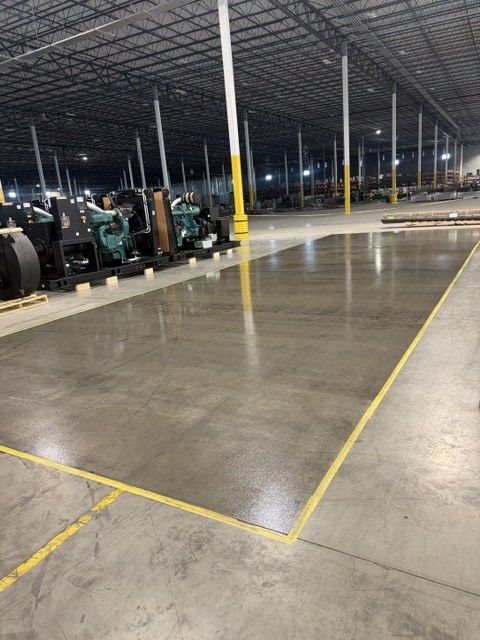
Clean, uniform, and the easiest to keep visibly clean. The default for mechanical rooms, utility spaces, kitchens, and warehouse floors where safety striping and traffic lanes need to read clearly against the background.

Decorative flake

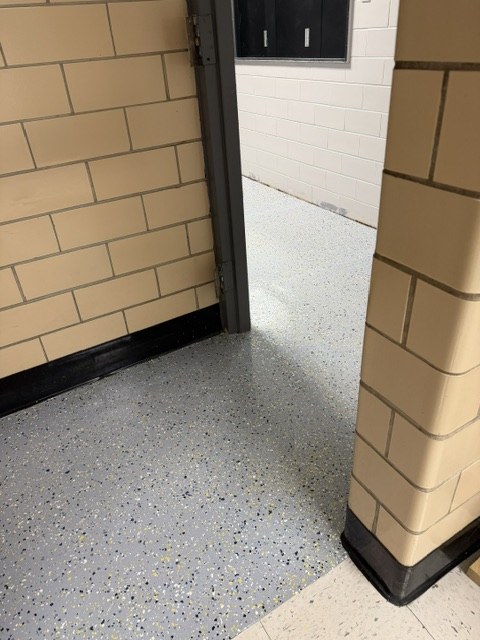
Flake broadcast into the base coat and sealed under a clear topcoat. It hides dirt and wear between cleanings and adds texture underfoot, which is why it is the usual answer for restrooms, hallways, locker rooms, and anywhere the public walks.

Metallic

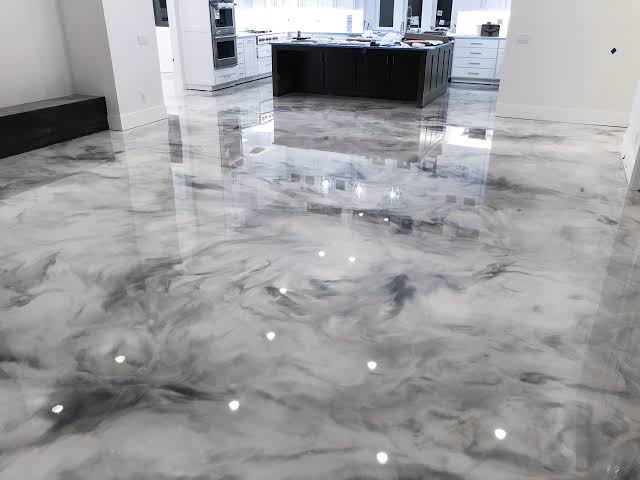
A poured, marbled finish with real depth to it. It belongs in showrooms, lobbies, retail floors, and open-plan spaces where the floor is meant to be part of the design rather than just the surface people stand on.

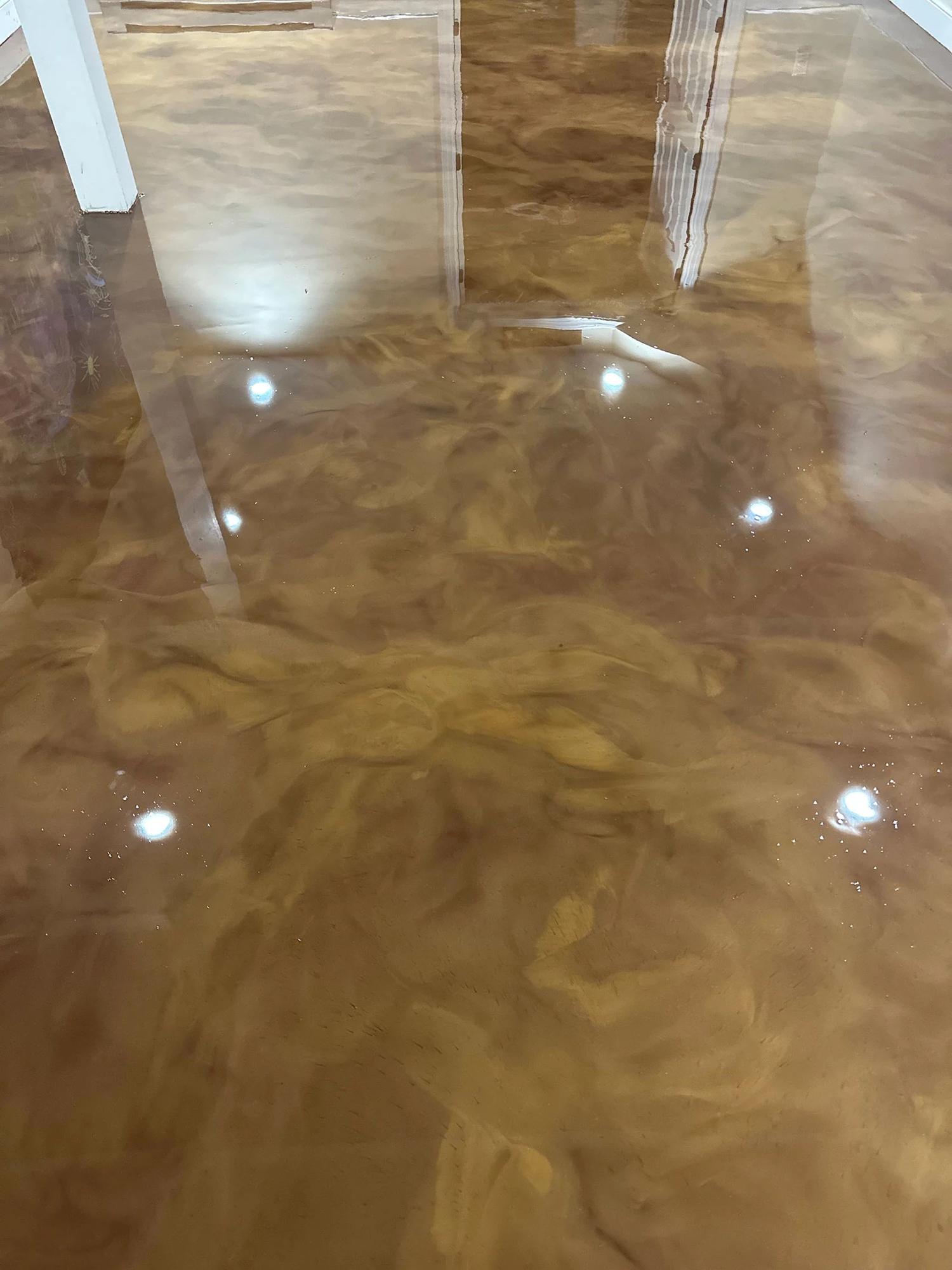
Copper and gold metallic epoxy floor with a mirror finish
Metallic pour, mirror finish
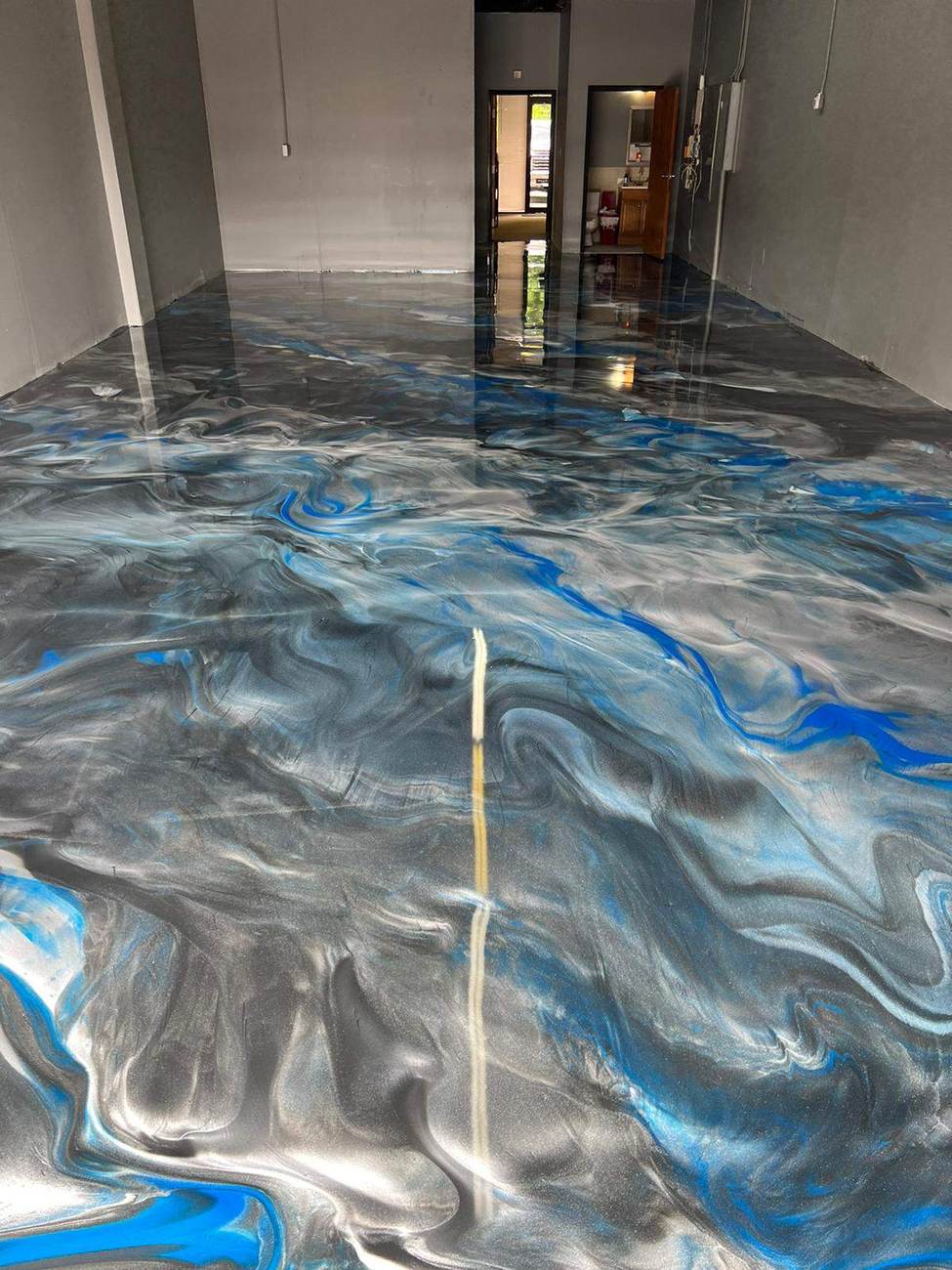
Blue and silver metallic epoxy floor with a high-gloss finish in a commercial space
Commercial metallic, high gloss
Flake floor running continuously through a school hallway doorway
Flake, run continuously through a doorway
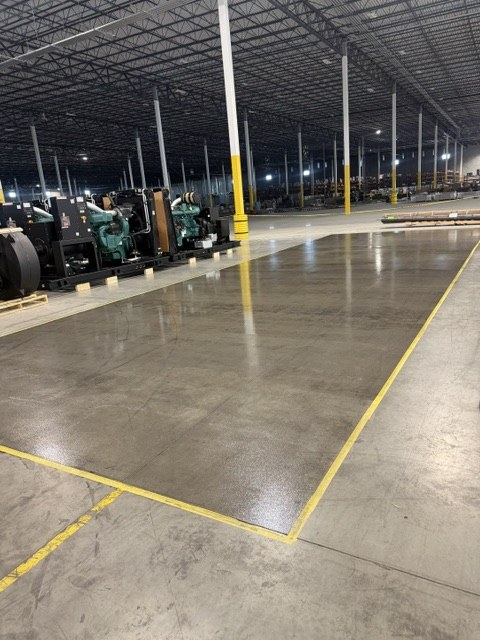
Sealed warehouse concrete pad with fresh yellow safety striping
Warehouse pad, sealed and safety striped

More finished work in the project gallery.

Testimonials

A Commercial Flooring Client

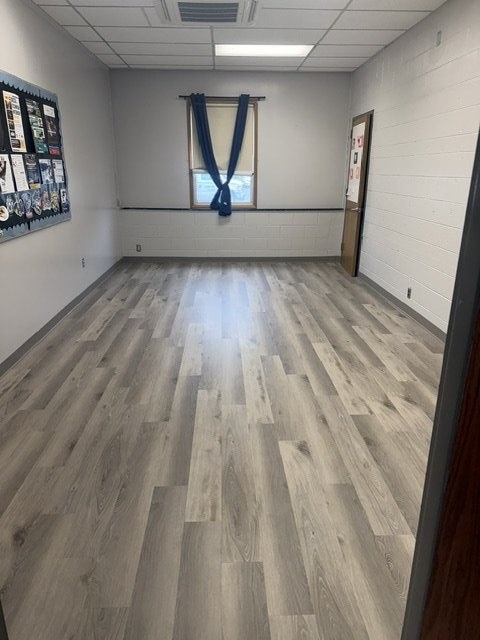
A recent office flooring project in the Kansas City metro.

5.0 Google Rating
Commercial office room finished in grey wood-look plank flooring, laid wall to wall beneath a curtained window

"Surface Shield recently completed our offices flooring project. They were timely, reasonably priced, and very professional."

Their communication was top notch and I highly recommend their services. We are already under contract with them for an over 30,000 sq ft project next year. Thanks!


Seth Morton Commercial office flooring client · Google review
Start to finish

What the job looks like

  1. Walk the space with an owner

    We measure, moisture-test the slab, look at what the floor has to survive, and talk through when the space can be released to us. Free, and no obligation.

  2. Written proposal

    System, finish, phasing plan, schedule, cure windows, warranty, and itemized pricing — all in writing before anything is committed.

  3. Strip and profile

    Old coatings, mastic, and adhesive residue come off, the slab is mechanically ground, and joints, cracks, and spalls are cut out and rebuilt.

  4. Build the floor

    Base coat, then flake or metallic work where the finish calls for it, then the clear topcoat that carries the traffic.

  5. Cure and hand back

    We confirm the cure window before the space goes back into service, walk the floor with you, and leave the site clean.

What is warrantied, and what it costs

Every surface we coat carries a workmanship warranty, from 1 to 15 years depending on the surface and the system specified. The exact term for your floor is spelled out in writing in your proposal. If our workmanship fails, we make it right.

Coating a surface typically saves 50 to 70% against a full tear-out and replacement, and coating projects generally start around $1,500 and up. Exact pricing is itemized in your written proposal. Payment plans are available on residential projects — see payment options.

We are a licensed and insured, family-owned LLC based in the Kansas City metro, and we take commercial and institutional work across Missouri, Kansas, and Arkansas. The owners are the people who walk the building, write the proposal, and answer the phone. Completed work includes the Orrick R-XI School District, commercial office flooring, and warehouse projects.

Common questions

Epoxy flooring FAQ

Have a question we haven't covered? Call or text us and ask.

Request a Proposal
Can you coat a basement floor that feels damp?

Often, yes, but only after we know what we are dealing with. We moisture-test the slab before quoting, and the reading decides whether the floor needs a moisture-tolerant specification. Coating a damp below-grade slab with the wrong system is the fastest way to end up with a floor that bubbles and lifts within a season.

Do we have to shut down while you work?

There is no demolition, so most commercial floors can be phased bay by bay, wing by wing, or after hours instead of closing the building. We plan the sequence with you before the proposal is written, and the schedule and cure windows are part of that document rather than a conversation on day one.

What is already down on our floor, and does it have to come off?

Old coatings, curing compound, tile mastic, and adhesive residue all come off during prep. Nothing bonds reliably through somebody else's failed finish, so removing it is part of the scope rather than an add-on we discover later. On the Orrick R-XI School District job we stripped and coated existing VCT tile using the Dr. Schutz system.

Will it hold up to pallet jacks, forklifts, and cleaning chemicals?

That is what the system is specified against. We ask what actually crosses the floor and what gets used to clean it, then build to that rather than to a generic square-foot number. A retail floor and a warehouse aisle get different answers on purpose.

Can you add safety striping, traffic lanes, or a cove base?

Yes. Striping and traffic markings are laid in and sealed under the topcoat so they wear with the floor instead of off it, and cove bases and thresholds are detailed as part of the prep. Tell us what the space needs when we walk it and it goes in the proposal.

Related

Garage Floor Epoxy

The residential side of the same craft: garages, workshops, and shop bays.

Gym Gloss Finish

Court and training floors for schools, rec centres, and home gyms.

Concrete & Driveway Sealing

Exterior slabs, aprons, walkways, and loading pads sealed against salt and freeze-thaw.

See all services

Put a proper floor under your building

Free, no-obligation proposals from a licensed and insured local company. We respond within one business day.

Get a Free Quote Call